Gobi dunes, Mongolian dinosaurs and raptor relatives
Velociraptor lived in the Late Cretaceous of what is now Mongolia, in a land of sand dunes.
Where it’s found
Its fossils come from Mongolia. Natural History Museum: Velociraptor (Dino Directory) The Gobi Desert holds some of the most extraordinary fossil beds in the world. American Museum of Natural History: Fossils of the Flaming Cliffs (exhibition)
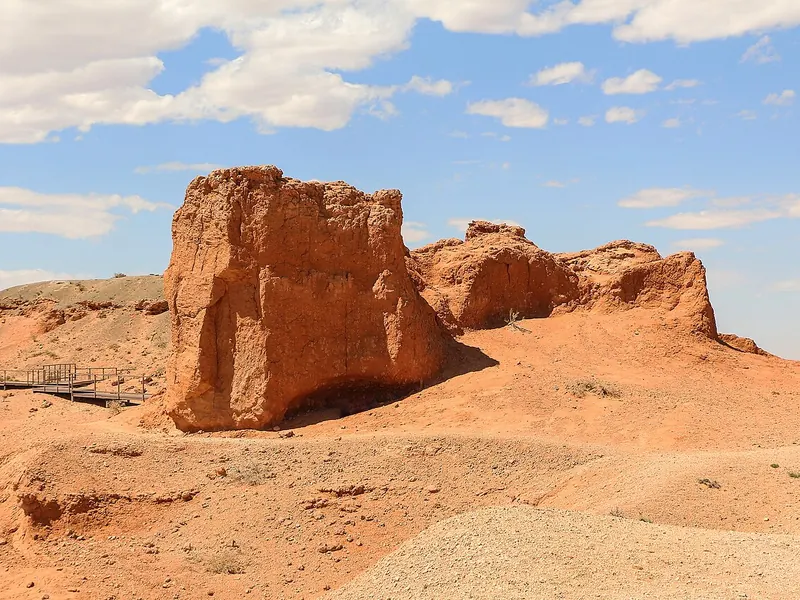
The pair were found in red sandstone called the Djadokhta Formation, in the Gobi Desert. American Museum of Natural History, OLogy card 038: Fighting Dinosaurs Scientists think rainstorms triggered sand avalanches like this, and other animals in the same rocks seem to have died trying to dig themselves out. American Museum of Natural History, OLogy card 038: Fighting Dinosaurs
Other dinosaurs from Mongolia
Compare the dates: not all of them lived at the same time as Velociraptor.
Protoceratops
Protoceratops: “first horned face”, a 1.8 m, 400 kg plant eater with a beak, from China and Mongolia, 74 to 70 million years ago. Natural History Museum: Protoceratops (Dino Directory) · checked 28 Oct 2026 Protoceratops is one of the best-known dinosaurs because its fossils are so common. American Museum of Natural History, OLogy: Fighting Dinos The American Museum of Natural History says it weighed up to 500 pounds (about 230 kg) and was shaped a bit like a pig. American Museum of Natural History, OLogy: Fighting Dinos · checked 28 Oct 2026
Oviraptor
Oviraptor: “egg thief”, 2 m long and 20 kg, from Mongolia, 85 to 75 million years ago. It had a beak and no teeth. Natural History Museum: Oviraptor (Dino Directory)
Citipati
Citipati: “lord of the funeral pyre”, 2.1 m long, from Mongolia, 81 to 75 million years ago. Natural History Museum: Citipati (Dino Directory)
Saurornithoides
Saurornithoides: “bird-like lizard”, 3 m long, from Mongolia, 85 to 80 million years ago, named by Osborn in 1924. Natural History Museum: Saurornithoides (Dino Directory)
Tarbosaurus
Tarbosaurus: “alarming lizard”, 10 m long, from China and Mongolia, 74 to 70 million years ago, and very like Tyrannosaurus. Natural History Museum: Tarbosaurus (Dino Directory)
Pinacosaurus
Pinacosaurus: “plank lizard”, 5 m long, from China and Mongolia, 81 to 75 million years ago. Groups of young ones have been found fossilised together. Natural History Museum: Pinacosaurus (Dino Directory)
Gallimimus
Gallimimus: “chicken mimic”, 6 m long and 490 kg, from Mongolia, about 70 million years ago. It may have run at 47 to 55 km/h. Natural History Museum: Gallimimus (Dino Directory) Jurassic Park shows a flock of Gallimimus stampeding. That’s possible, but nobody knows for sure. Natural History Museum: Gallimimus (Dino Directory)
A Gobi nest of troodontid eggs, found in 1995 with a just-hatched baby, had its eggs standing on end: a sign of parental care. American Museum of Natural History: Fossils of the Flaming Cliffs (exhibition)
The raptors
“Raptor” isn’t a proper scientific term. Scientists say dromaeosaurs: small to medium-sized hunters with large toe claws. Natural History Museum: Deinonychus (Dino Directory) It belongs to the dromaeosaurs (Dromaeosauridae), a family of theropods. Natural History Museum: Velociraptor (Dino Directory)
Deinonychus
Deinonychus: “terrible claw”, 3.4 m long and 100 kg, from the USA, 115 to 108 million years ago. Natural History Museum: Deinonychus (Dino Directory) Deinonychus was almost twice as long and twice as tall as Velociraptor. Smithsonian Magazine: You say “Velociraptor,” I say “Deinonychus” No one has found direct proof that Deinonychus had feathers, but scientists think it very likely did. Natural History Museum: Deinonychus (Dino Directory) · checked 28 Oct 2026
Utahraptor
Utahraptor: “Utah plunderer”, 5.5 m long and 350 kg, from the USA, 139 to 135 million years ago. It is the largest known dromaeosaur. Natural History Museum: Utahraptor (Dino Directory) Utahraptor is thought to have been about the size of a polar bear, 5 to 6 m long. Natural History Museum: Vicious Velociraptor: tales of a turkey-sized dinosaur Utahraptor became Utah’s state dinosaur after a 10-year-old petitioned the state senate in 2018. Natural History Museum: Utahraptor (Dino Directory)
Microraptor
Microraptor: “tiny plunderer”, 0.8 m long and 1 kg, from China, 120 million years ago, with wings on its legs as well as its arms. Natural History Museum: Microraptor (Dino Directory) Microraptor was about the size of a crow, and around 300 specimens have been found, more than any other dromaeosaur. Natural History Museum: Microraptor (Dino Directory) · checked 28 Oct 2026 Pigment cells in a fossil found in 2012 show Microraptor probably had shiny black feathers. Natural History Museum: Microraptor (Dino Directory) In 2019 scientists named a new lizard, Indrasaurus, found whole in a Microraptor’s belly. Natural History Museum: Microraptor (Dino Directory)
Dromaeosaurus
Dromaeosaurus: “running lizard”, 1.8 m long and 15 kg, from Canada and the USA, 76 to 74 million years ago. Natural History Museum: Dromaeosaurus (Dino Directory)
Sinornithosaurus
Sinornithosaurus: “Chinese bird lizard”, 2 m long, from China, 122 to 120 million years ago. Natural History Museum: Sinornithosaurus (Dino Directory)
Bambiraptor
Bambiraptor: “Bambi plunderer”, 1 m long, from the USA, 84 to 71 million years ago. Natural History Museum: Bambiraptor (Dino Directory)
Archaeopteryx
Archaeopteryx: “ancient wing”, 0.5 m long, from Germany, 149 to 145 million years ago. Its first fossil was found in 1861. Natural History Museum: Archaeopteryx (Dino Directory)
One early Microraptor fossil was part of the “Archaeoraptor” hoax: Microraptor’s tail had been added to the front half of a different small dinosaur, Yanornis, plus a third animal. Natural History Museum: Microraptor (Dino Directory)
Strictly speaking, all birds are dinosaurs. But not all dinosaurs are birds. Natural History Museum: Archaeopteryx (Dino Directory)
Next: myths vs facts →