A claw, a crushed skull and a misnamed egg thief
How an American expedition to Mongolia found Velociraptor, and the mistakes that came with it.
August 1923
The first Velociraptor fossil was found on 11 August 1923 in the Gobi Desert, Mongolia. Natural History Museum: Vicious Velociraptor: tales of a turkey-sized dinosaur The first find was the claw, with a complete but crushed skull, on an American Museum of Natural History expedition. Natural History Museum: Vicious Velociraptor: tales of a turkey-sized dinosaur
The expedition was led by Roy Chapman Andrews, who later became the museum’s director. American Museum of Natural History: Dinosaur Eggs
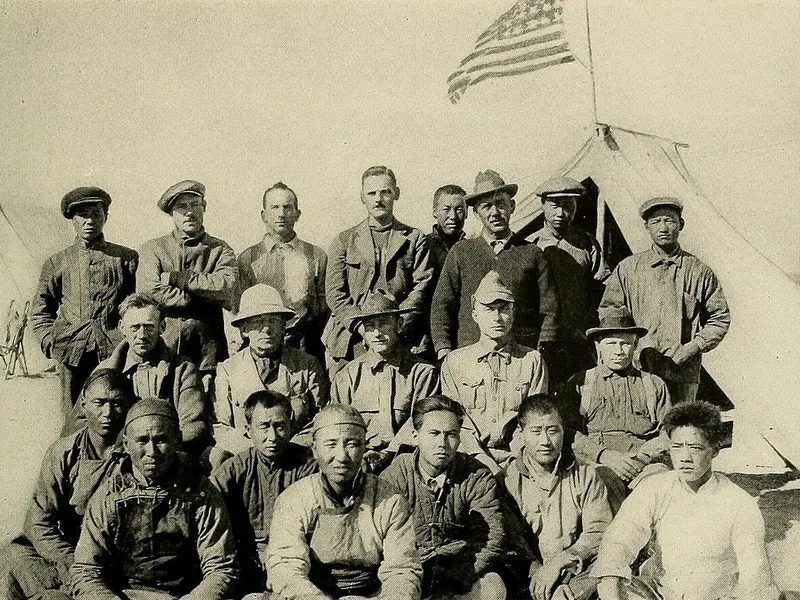
The type specimen, AMNH 6515, is a skull, jaws and a claw, collected by P. C. Kaisen in the Djadochta beds at Shabarakh Usu. Osborn (1924), Three new Theropoda, Protoceratops zone, central Mongolia, American Museum Novitates 144 The very first Velociraptor skull was lying right next to a Protoceratops skull. Osborn (1924), Three new Theropoda, Protoceratops zone, central Mongolia, American Museum Novitates 144
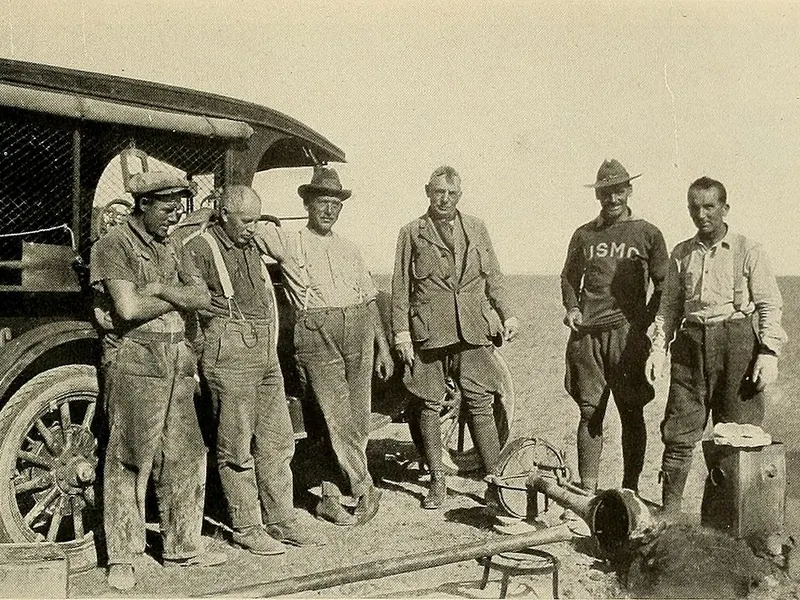
Osborn’s short paper
It was described in 1924 by Henry Fairfield Osborn, then president of the American Museum of Natural History. Natural History Museum: Vicious Velociraptor: tales of a turkey-sized dinosaur Osborn named three new dinosaurs in the same short 1924 paper: Velociraptor, Saurornithoides and Oviraptor. Osborn (1924), Three new Theropoda, Protoceratops zone, central Mongolia, American Museum Novitates 144
Osborn described it in 1924 as “swift and raptorial in habit”. Osborn (1924), Three new Theropoda, Protoceratops zone, central Mongolia, American Museum Novitates 144 In his 1924 paper he wrote that the claw bones “probably belong to the enlarged Digit I of the manus”: the first finger. Osborn (1924), Three new Theropoda, Protoceratops zone, central Mongolia, American Museum Novitates 144
Osborn thought the claws were for holding prey, and that its long snout and wide gape meant the prey was alive and “of considerable size”. Osborn (1924), Three new Theropoda, Protoceratops zone, central Mongolia, American Museum Novitates 144
The egg thief who wasn’t
The same 1923 expedition found the first dinosaur eggs known to science, at the Flaming Cliffs of Mongolia. American Museum of Natural History: Dinosaur Eggs The eggs were thought to be Protoceratops eggs, because Protoceratops was the most common dinosaur there. American Museum of Natural History: Dinosaur Eggs
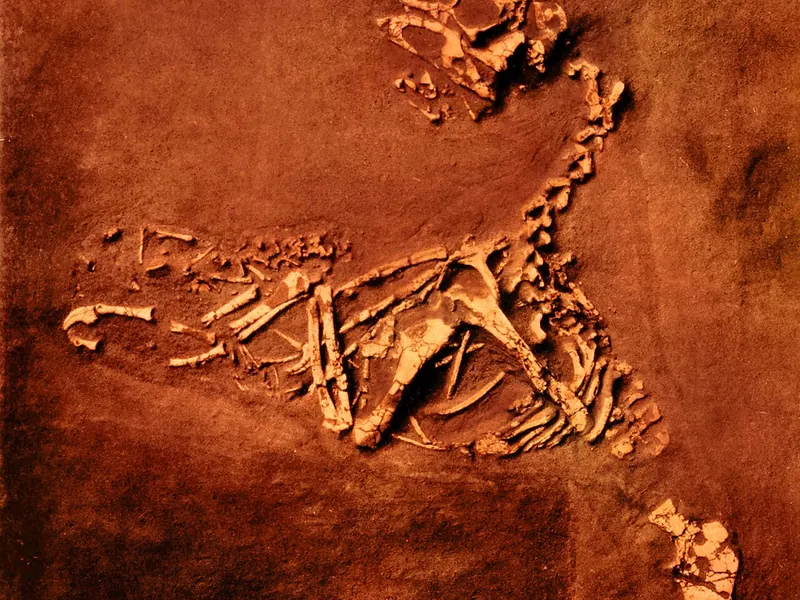
Oviraptor, the “egg seizer”, got its name because its skull was found lying directly over a nest of eggs. Osborn (1924), Three new Theropoda, Protoceratops zone, central Mongolia, American Museum Novitates 144 Osborn himself warned the name “may entirely mislead us as to its feeding habits”. Osborn (1924), Three new Theropoda, Protoceratops zone, central Mongolia, American Museum Novitates 144
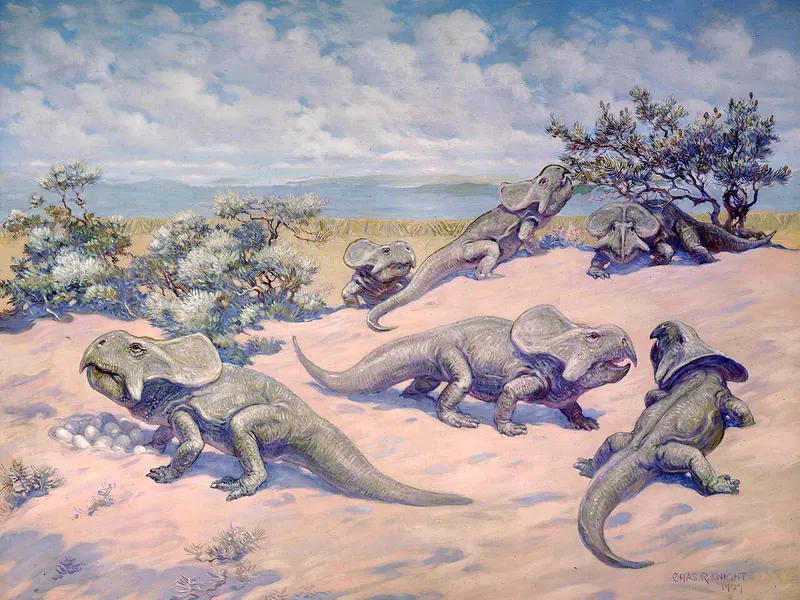
In the 1990s, museum expeditions found identical eggs, one holding the embryo of an Oviraptor-like dinosaur. Oviraptor was a parent, not an egg thief. American Museum of Natural History: Dinosaur Eggs
Still going
American Museum of Natural History scientists have been travelling to the Gobi for over 100 years. American Museum of Natural History: Fossils of the Flaming Cliffs (exhibition) · checked 28 Oct 2026 Since the museum returned to the Gobi in 1990, the Mongolian Academy of Sciences has kept ownership of all the fossils it finds. American Museum of Natural History: Fossils of the Flaming Cliffs (exhibition)
Scientists found six quill knobs, the bumps where feathers anchor to bone, on a Velociraptor forearm dug up in Mongolia in 1998. American Museum of Natural History: Velociraptor Had Feathers, Study Confirms, 2007
Meanwhile, in Montana
The first Deinonychus fossils were found in Montana by John Ostrom and Grant Meyer in 1964. Ostrom named it five years later. Natural History Museum: Deinonychus (Dino Directory) Ostrom’s work helped scientists see dinosaurs as athletic, warm-blooded animals rather than slow, lumbering ones: “the dinosaur renaissance”. Natural History Museum: Deinonychus (Dino Directory)
Next: open questions →