The film raptor and the real one
The Velociraptor most people picture comes from Jurassic Park. Here is what the fossils say instead, point by point.
The fossil animal: about turkey-sized, feathered, palms facing in, claw held off the ground.
The film animal: twice the size, scaly, claw on the ground.
Size
Skin
Hands
The claw
Brains
Hunting
The name
The drawing is our own diagram, not a tracing of a fossil. Proportions are simplified; the feathered version follows the evidence on this page, and the film version follows the differences the museums describe.
Raptors to scale
Among its relatives, Velociraptor sits in the middle. The films borrowed the size of a much bigger one.
Lengths are the Natural History Museum’s Dino Directory figures, checked 28 Oct 2026. The film bar is simply twice the museum’s 1.8 m for Velociraptor. Utahraptor, named in 1993, is the biggest known.
How Velociraptor got the part
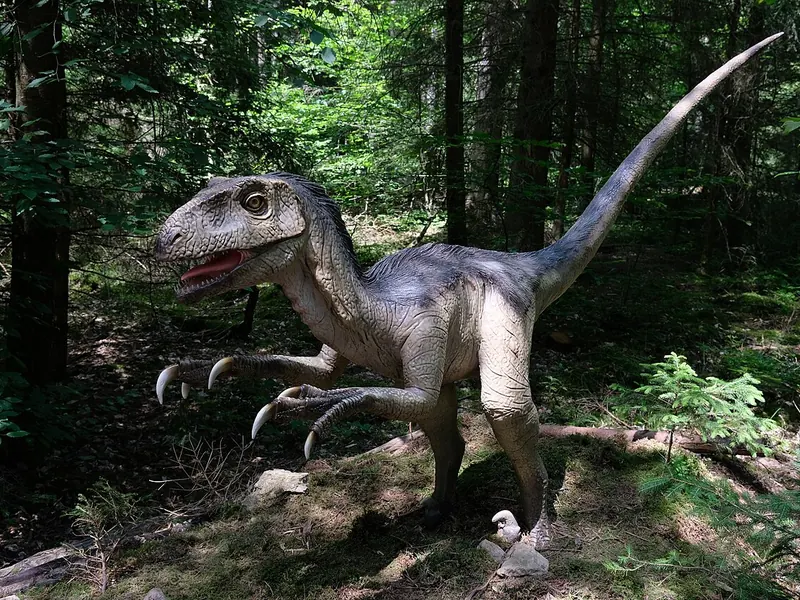
When Velociraptor appeared in the novel Jurassic Park, the author based its details on the bigger Deinonychus. The films did the same. Natural History Museum: Deinonychus (Dino Directory) The film raptors were based on the much larger Deinonychus, but the name Velociraptor was “more dramatic and easier to say”. American Museum of Natural History: Get to Know a Dino: Velociraptor, 2016
In his 1988 book Predatory Dinosaurs of the World, the artist Gregory S. Paul put Deinonychus fossils under the name Velociraptor. Palaeontologists didn’t agree, and the two stayed separate. Smithsonian Magazine: You say “Velociraptor,” I say “Deinonychus” Michael Crichton listed Paul in the acknowledgements of his novel Jurassic Park, and used the name Velociraptor for its large, sickle-clawed predators. Smithsonian Magazine: You say “Velociraptor,” I say “Deinonychus”
Then came Utahraptor
The film’s raptors were seen as unscientifically big. Then, says the Natural History Museum, soon after the first film came out Utahraptor “was discovered, even larger than the virtual Velociraptors”. Natural History Museum: Velociraptor (Dino Directory)
Jim Jensen found the first Utahraptor remains in 1975, but it wasn’t studied in detail until more fossils were found in 1991. It was named in 1993. Natural History Museum: Utahraptor (Dino Directory) Utahraptor’s describer considered naming the species after Steven Spielberg, hoping the director’s company would help fund the research. The deal never happened. Natural History Museum: Utahraptor (Dino Directory)
What the 1993 film got right, for 1993
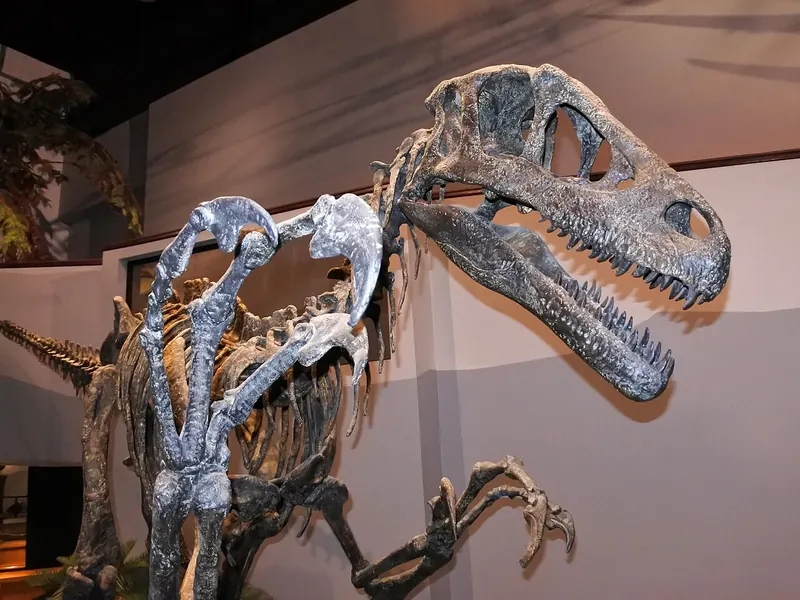
Steven Spielberg’s film Jurassic Park came out in 1993. Natural History Museum: Debunking dinosaur myths and movie misconceptions In 1993, scientists did think Velociraptor and Deinonychus looked like that. A flood of feathered dinosaur discoveries began in the mid-1990s. Natural History Museum: Debunking dinosaur myths and movie misconceptions
The Natural History Museum’s Susie Maidment says the biggest mistake now is that the film raptors are naked: “It’s absolutely certain that they would have been covered in feathers.” Natural History Museum: Debunking dinosaur myths and movie misconceptions · checked 28 Oct 2026
Hands and feet
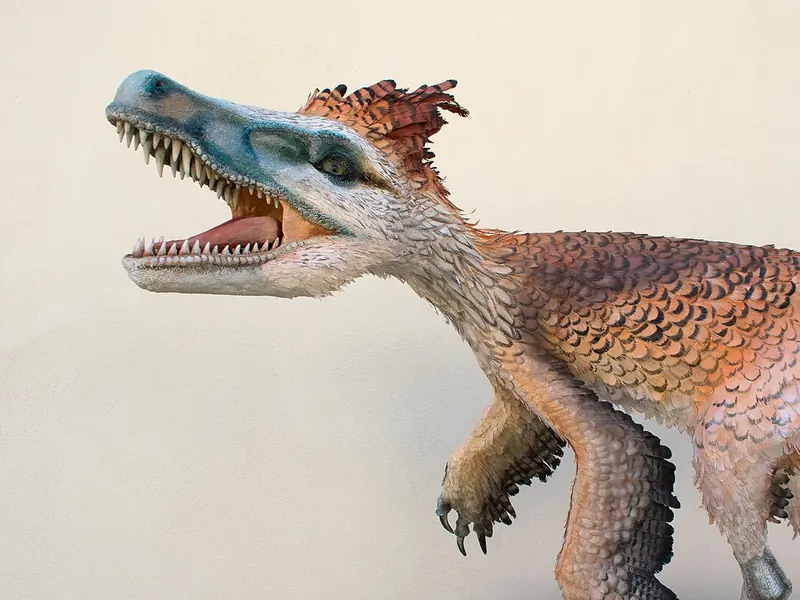
Meat-eating dinosaurs are often drawn with “bunny hands”, palms down like a pianist’s. Natural History Museum: Debunking dinosaur myths and movie misconceptions Meat-eating dinosaurs couldn’t turn their palms to face the ground. Their palms faced each other: “they could clap, but they weren’t pianists.” Natural History Museum: Debunking dinosaur myths and movie misconceptions
No evidence of claw tapping has ever been found. Tracks of Velociraptor’s relatives show no marks from the sickle claw. Natural History Museum: Vicious Velociraptor: tales of a turkey-sized dinosaur The Natural History Museum’s David Button thinks the tapping was “just a cinematic ploy to make them look alert and more scary”. Natural History Museum: Vicious Velociraptor: tales of a turkey-sized dinosaur
Would feathers ruin the scare?
Button thinks feathered film raptors would be creepier: “something we recognise but a bit wrong”. Natural History Museum: Vicious Velociraptor: tales of a turkey-sized dinosaur Mark Norell, a curator at the American Museum of Natural History and co-author of the 2007 study: “If animals like Velociraptor were alive today our first impression would be that they were just very unusual looking birds.” American Museum of Natural History: Velociraptor Had Feathers, Study Confirms, 2007
Lengths, weights and dates for Velociraptor are estimates from fossils, and the museums don’t all agree. The Natural History Museum gives 1.8 m and 7 kg; the American Museum of Natural History’s 2007 feather study described an animal about 1.5 m long and about 30 pounds (14 kg). The Natural History Museum dates it to 74 to 70 million years ago; an American Museum of Natural History card dates the Fighting Dinosaurs to about 80 million. Each figure links to who said it and the date we checked. See open questions for the disagreements side by side.